field notes · the great migration, from india

The Great Migration Safari Package from India, compared and explained

Wildebeest herds crossing the Mara River during a Great Migration safari from India
the Mara River, peak crossing week — the reason this whole itinerary exists

3

package tiers to choose from

7 days

our recommended minimum

Jul–Oct

the river-crossing window

₹1.85L

from · per person

Type “Great Migration safari package from India” into a search bar and you’ll end up with forty open tabs, three different currencies, and no real sense of what you’re actually paying for. Some quotes start in Nairobi and leave the international leg as a surprise. Others bundle three destinations under one “migration” label when only a single afternoon is spent anywhere near a river. This page exists to sort that out: three package tiers we actually run for Indian travellers, a sample week-by-week itinerary, honest INR pricing, and the exact months worth planning your leave around.

We build our Great Migration safari packages from India around one rule — every day should sit inside the migration itself, not spent driving towards it. That means fewer stops than our classic ten-day Kenya route, a private vehicle and naturalist throughout, and camps chosen because they sit inside — or beside — the crossing corridor, not simply because they’re a short drive from Nairobi. Whether you have six days or ten, a first safari or your fifth, the shape below is what our designers actually build and price before you fly.

Planned in your time zone

One designer, IST business hours, who answers in hours rather than days — no 2 am calls to a desk on another continent.

Priced and billed in INR

No card-conversion surprises. Every package on this page is quoted, invoiced and paid in rupees, with the exchange rate locked at booking.

Kenya eTA, handled

We walk you through the online visa application, flag the right vaccination, and hand you a documents pack in plain English before you fly.
What exactly is the Great Migration?

Roughly a million and a half wildebeest, travelling with several hundred thousand zebra and gazelle, move in a rough clockwise loop through the Serengeti-Mara ecosystem every year, chasing the rain and the grass it grows. There is no single migration “day” — it is a season-long presence that peaks in specific weeks, and the phrase “Great Migration safari” usually means timing a trip to one of those peaks rather than the migration as a whole.

For a package built from India, that peak is almost always the Masai Mara in Kenya, between July and October, when the herds push north across the Mara River in search of fresh grazing. It is the most accessible chapter of the migration for Indian travellers — a direct-enough flight to Nairobi, no need to add Tanzania to your visa list, and camps that have spent decades learning exactly where the herds tend to cross.

the circuit, month by month

Jan–MarS. Serengeticalving season · half a million calves in weeks
Apr–JunCentral & W. Serengetiherds fatten up, start moving north-west
Jun–JulWestern Corridorfirst mass crossings, at the Grumeti River
Jul–SepMasai Mara, Kenyaherds cross the Mara River north — our packages
OctMara & Mara Trianglecrossings continue, noticeably thinner crowds
Nov–DecBack to Serengetishort rains pull the herds south again

the offer

Three Great Migration safari packages from India

Every version below is private, run by our own naturalists, and quoted for Indian travellers before you book a single flight.

The Migration Explorer

from₹1,85,000

6 days · 5 nights · per person, twin sharing

A focused six days for travellers who want the crossings without the extras — a private vehicle, a well-placed tented camp just outside the main reserve, and every drive built around where the herds were seen that morning.

  • Private 4x4 + naturalist for all six days
  • 4 nights in a Mara-adjacent tented camp
  • All park fees, meals & Nairobi transfers
  • Return flight Nairobi ↔ Mara included

The Migration Private Conservancy

from₹4,95,000

7 days · 6 nights · per person, twin sharing

The same seven days, run from an exclusive-use conservancy camp that caps vehicle numbers per sighting — for travellers who want the migration without another vehicle in the photograph.

  • Private conservancy camp, max 8 vehicles per sighting
  • Dedicated guide + vehicle, entire stay
  • Bush breakfast, sundowners & a night game drive
  • Photographic hide access on request

woven into every migration package

  • One dedicated travel designer in IST hours, start to finish
  • 100% private game drives — never a shared vehicle
  • All park & conservancy fees, pre-paid in INR
  • Kenya eTA guidance & a full pre-departure documents pack
  • Free date changes up to 45 days before travel

left out, on purpose

  • International flights between India and Nairobi (we’ll help you pick the right connection)
  • Kenya eTA fee & mandatory travel insurance (we guide you through both)
  • Gratuities for camp staff and your naturalist
  • Premium drinks and spa treatments at select camps

the itinerary, unrolled

A sample 7-day Great Migration itinerary

This is how The Migration Signature usually runs. Swap in an extra Mara day, add a conservancy night, or hand it to us to rebuild from scratch.

the mara, migration only

Zebras grazing in Nairobi National Park on arrival day of a Great Migration safari from India
Nairobi’s own herd, five minutes from the airport
day one

Land, and lean into Nairobi

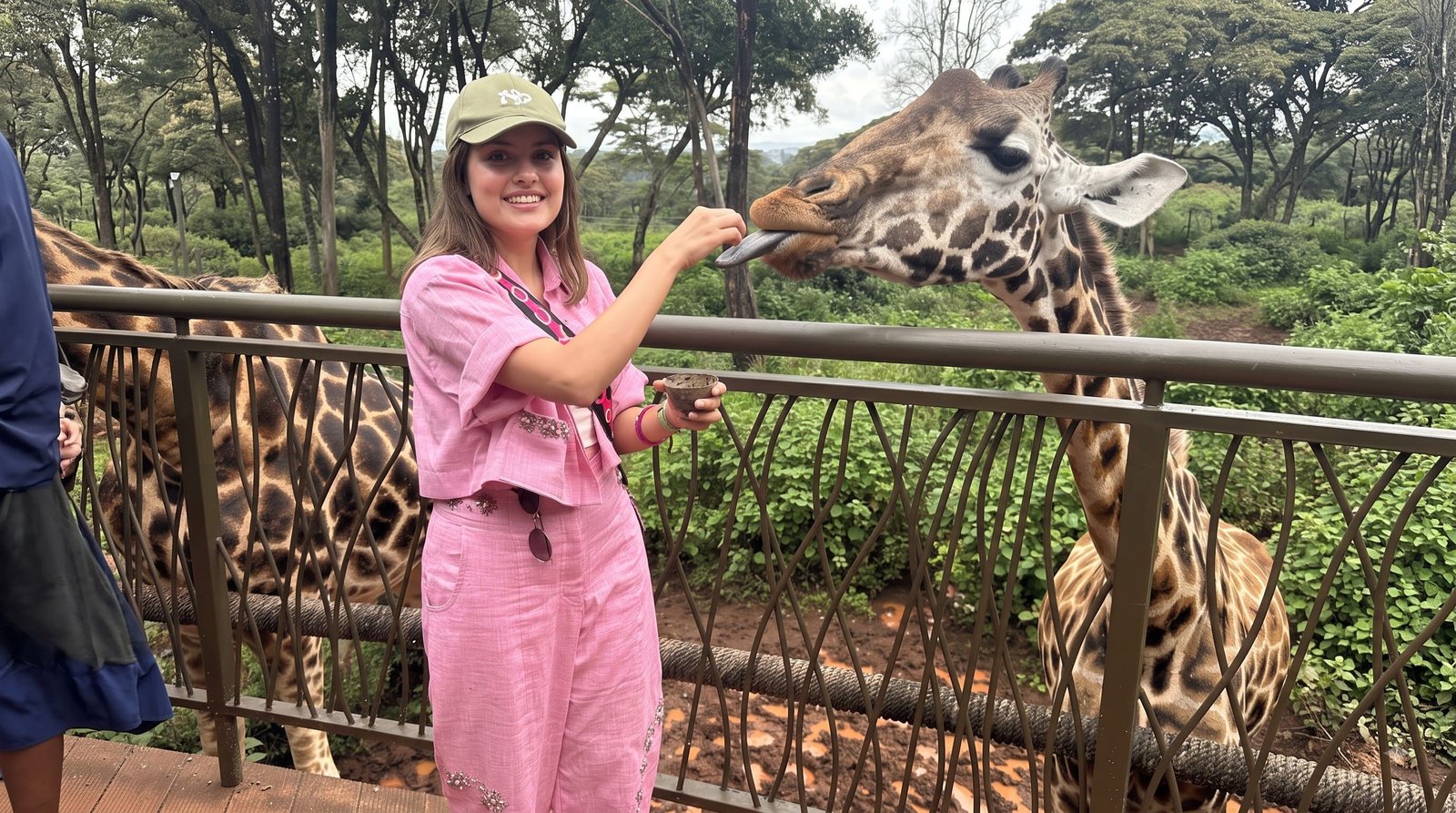
Touch down at Jomo Kenyatta International, where your designer’s representative is already holding your name card, and settle into a garden lodge in Nairobi’s green Karen suburb. There’s time for the Giraffe Centre if your flight lands early — otherwise it’s an evening briefing over Kenyan coffee, mapping the six days of migration ahead.

stay — a garden lodge in Karen, Nairobi

An elephant crossing the dirt track ahead of a private safari vehicle heading into the Masai Mara
the Mara’s idea of a traffic jam
day two

Fly into the heart of the herds

A short scenic flight — about 45 minutes — replaces the long road transfer, landing you on a Mara airstrip by mid-morning. After a light lunch at camp, your first game drive goes out chasing yesterday’s sightings, because the herds don’t wait around for check-in.

stay — a tented camp above a crossing point, night one of five

A cheetah scanning the plains for wildebeest during a Great Migration safari in the Masai Mara
reading the plains for tomorrow’s crossing
day three

A full day with the herds

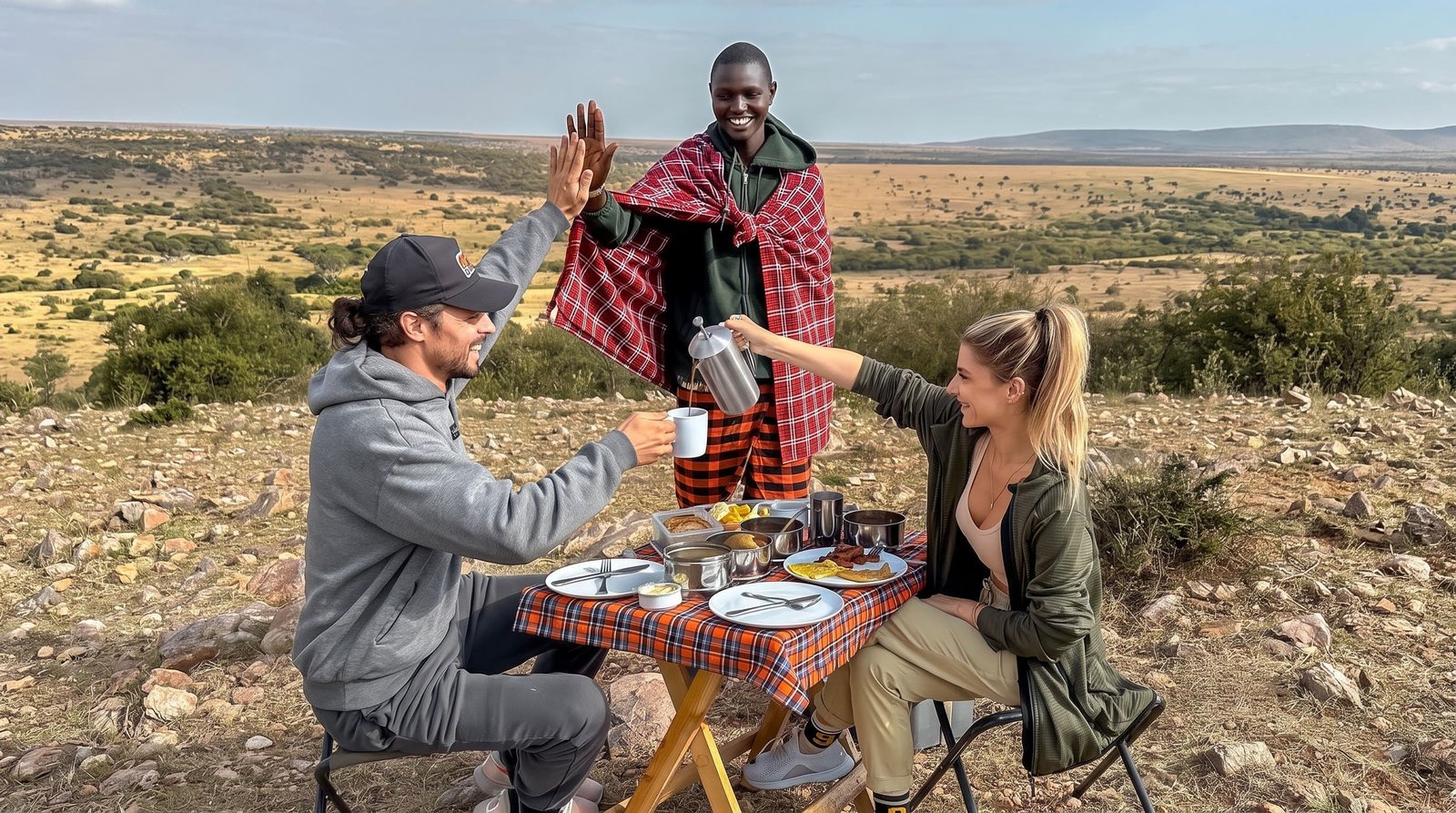
Dawn to dusk with your private naturalist, radio tuned to every camp in the conservancy. Breakfast is laid out wherever the morning takes you, and the afternoon drive follows whichever predator is working the edge of the herd that day — usually a cheetah, sometimes worse company.

stay — same camp

Wildebeest surging across the Mara River during the Great Migration
the crossing, at last
day fourthe signature moment

The crossing, if it comes

Nothing about a river crossing can be scheduled, so this is the day we hold loosely open — parked at a known crossing point from mid-morning, patient, engine off, waiting for one wildebeest to decide first. When it happens, it happens fast, and it does not repeat itself the same way twice.

stay — same camp

Hot air balloons drifting over the Masai Mara at sunrise during migration season
breakfast at 6,000 feet
day five

Up before the herds

A pre-dawn balloon lift-off, drifting silently over grazing herds as the light turns the plains gold, followed by a champagne breakfast laid out on the grass exactly where you land. The afternoon is deliberately unplanned — the pool, a spa treatment, or one more short drive if the radio has news.

stay — same camp

Golden sunset over the acacia plains of a private Masai Mara conservancy
a conservancy sunset, shared with no one
day six

Into the conservancy

A short transfer into a neighbouring private conservancy for a change of pace — no other vehicles at a sighting, a bush lunch under an acacia, and an evening game drive that runs past the sunset curfew the main reserve enforces, into proper Mara dark.

stay — a private conservancy camp, final night

Guests on a final morning game drive through the Masai Mara before flying home to India
one last sunrise drive
day seven

One last drive, then home

A final sunrise drive, brunch at camp, then a short flight back to Nairobi with the whole afternoon still ahead of you — enough time for the Sheldrick elephant nursery or the craft markets before your evening flight connects you home.

next — home, with a camera roll your friends won’t believe

pick your month

Best time for a Great Migration safari from India

The migration itself never really stops — only the crossings do. Here is the honest month-by-month read we give every guest booking from India.

Jun – early Jul Herds are still arriving from the Serengeti; sightings build steadily through the month, camps are quieter and rates are kinder. the early window
Jul – Aug First river crossings begin in earnest at the Mara and Talek rivers — book 6–9 months out for this window. peak season begins
Aug – Sep The largest herds and the most dramatic crossings of the year, alongside the busiest camps and the earliest booking deadlines. unmissable
Late Sep – Oct Crossings continue, often just as dramatic, with noticeably thinner crowds and better camp availability. the smart pick
Nov The short rains begin pulling the herds back south; a last, quieter window before they leave Kenya for the year. closing window

our designers’ tip — flying in from India for July–September, build in two buffer days either side of your booked dates. Crossings run on the herds’ schedule, not the calendar, and the guests who see three crossings instead of one are usually the ones who gave the migration room to be unpredictable.

the practical part

How to book a Great Migration safari from India

Nairobi is a well-connected hop from India — direct and one-stop options run from Mumbai, Delhi and Bengaluru, most landing before noon local time with the rest of the day still ahead of you.

1

Pick your season and your tier

Tell us your travel window and which of the three packages above fits — we confirm real-time camp availability before you commit to anything.

2

Lock flights and your Kenya eTA

We recommend routes from your home city, then walk you through Kenya’s online eTA application and the Yellow Fever certificate requirement — usually a half-hour job with our checklist.

3

Confirm with a deposit

A deposit holds your camps and internal flights at today’s rate. Peak-season dates, July to September, are worth locking six to nine months ahead.

4

Fly, and meet your naturalist

Land in Nairobi, and your designer’s representative takes it from there — private vehicle, private guide, and an itinerary that already has your name on it.

5

We stay reachable throughout

Your designer is a message away in IST hours for the whole trip — plan changes, a delayed flight, or simply the excitement of your first crossing.

before you ask

Great Migration safari packages, answered honestly

The questions Indian travellers ask most about booking this trip. Something else on your mind? Your designer will happily answer it.

Every package on this page includes a private 4x4 vehicle and naturalist guide, all park and conservancy fees, all meals at camp, and your internal flight between Nairobi and the Mara. What’s excluded on purpose: international flights from India, your Kenya eTA fee, travel insurance, and gratuities — we help you plan for all four before you fly.
For July to September crossings, six to nine months ahead is the safe window — camps inside the crossing corridor hold as few as eight to twenty tents. For the quieter late-September and October crossings, three to four months is usually comfortable.
Our three tiers start from ₹1,85,000 per person for a focused six-day trip, ₹2,75,000 for our most-booked seven-day package with a balloon safari, and ₹4,95,000 for a private-conservancy version with capped vehicle numbers. All three are quoted in INR before you fly, with no currency surprises later.
Yes — Kenya requires an Electronic Travel Authorisation (eTA), a straightforward online application we walk you through and review before submission. A Yellow Fever vaccination certificate is also recommended for travellers arriving from India, and comprehensive travel insurance is mandatory on every trip we run.
Seven days is our sweet spot — enough time to sit through at least one river-crossing wait without rushing, plus a change of scenery into a private conservancy. Six days works if your dates are tight; fewer than that and you’re trading real waiting time at the river for driving time instead.
It’s actually one of the better first-safari choices, precisely because the spectacle does the work for you — you don’t need prior safari experience to be moved by a river crossing. For honeymooners, our Migration Signature and Private Conservancy tiers both include quieter sundowner spots and camps that book out entire river-facing tents on request.

seven days, one very good crossing.

Chat on WhatsApp Call +91 98744 08179